Primordia station
January 2026
Team project with collaborators: Annie Zhang & Moseley Andrews
Concept submitted to the Aurelia Prize
Human cooperation in space has been an instrument of discovery and diplomacy for over 50 years.
Primordia represents a 2075 vision for the next phase in that progression – a 1,000-person post-baccalaureate university in low Earth orbit which serves as an engine of intercultural co-development, and whose habitat shows that humans can coexist sustainably off-world.
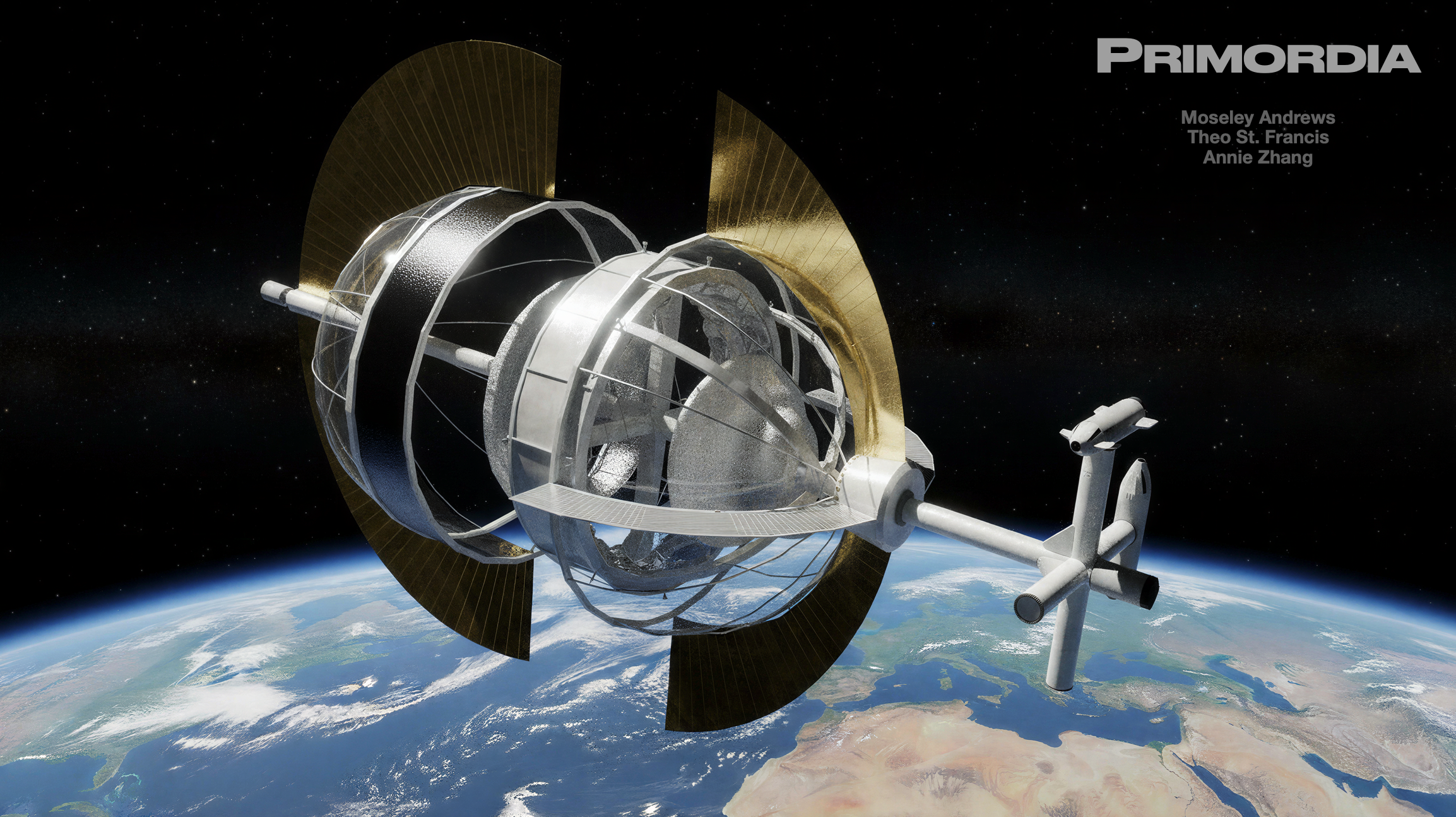
Primordia: for “the earliest form” (of a self-sustaining human presence in space), and from Portuguese “moradia,” for “housing".
Residents of Primordia are adults ages 25-50 who represent every nation on Earth and stay on-station for periods of 3-5 years.
They are chosen for traits equally weighted among emotional intelligence, subject-matter expertise, and open-mindedness, for their purpose on Primordia is to contribute to new paradigms of community while conducting microgravity research for their home countries and the Earth writ-large.
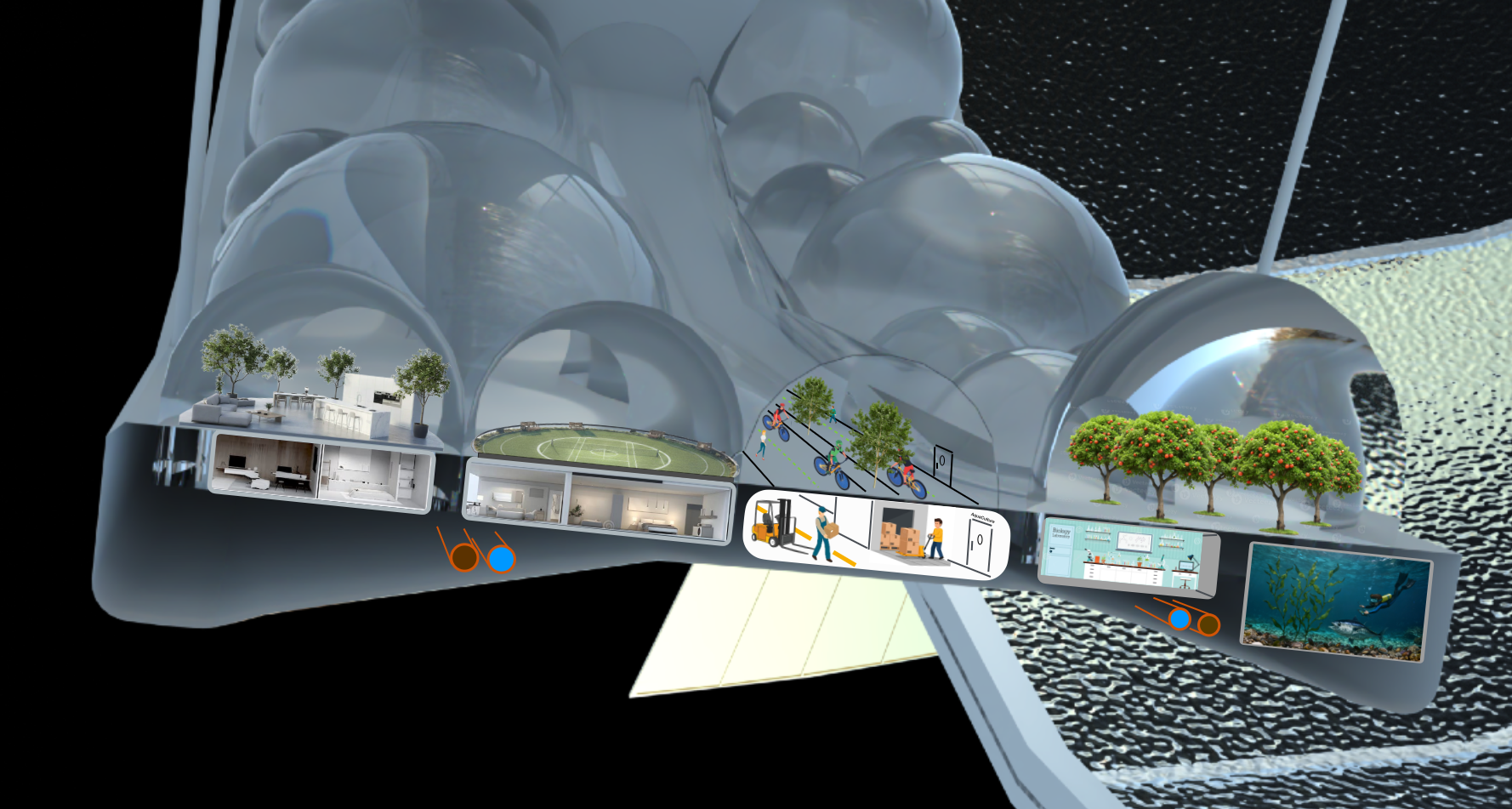
Astronauts will rest and recreate on the ¾-g, 3 rpm rotating ring, the Gyre, in pressured pods which contain their homes, farms, shops, restaurants, walk-bike boulevard (the Infinite), natatorium, and the rotation-adapted soccer variant, Corioliball.
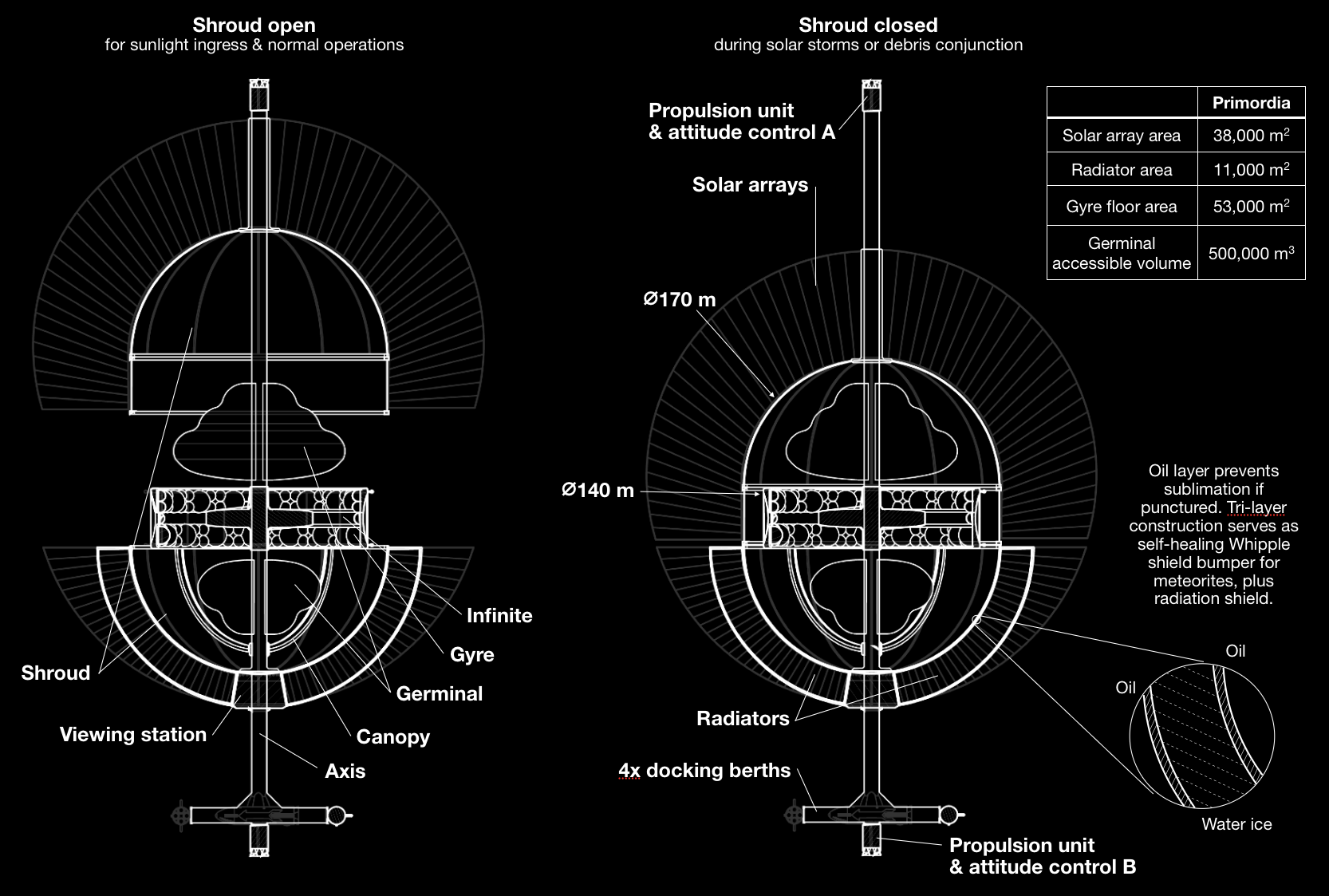
Astronauts’ vestibular implants (developed by 2075) allow them to acclimate rapidly to otherwise-vertiginous Coriolis forces as they traverse the variable-gravity garden-walk, the Canopy, toward the microgravity cellulomorphic place of work, teaching, and study, the Germinal.
This two-node nexus celebrates the unique opportunities low-gravity offers for scientific and artistic study in three dimensions, amid architecture which emphasizes cohesion rather than hierarchy.
All residents concentrate in year-long phases on studying, researching, and teaching, with their various focus areas pertaining to goals in their home countries.
The Primorida habitat itself orbits Earth at 1200 km, above 100,000s of constellation satellites and the bulk of orbital debris, and in the lowest reaches of the Inner Van Allen Belt.
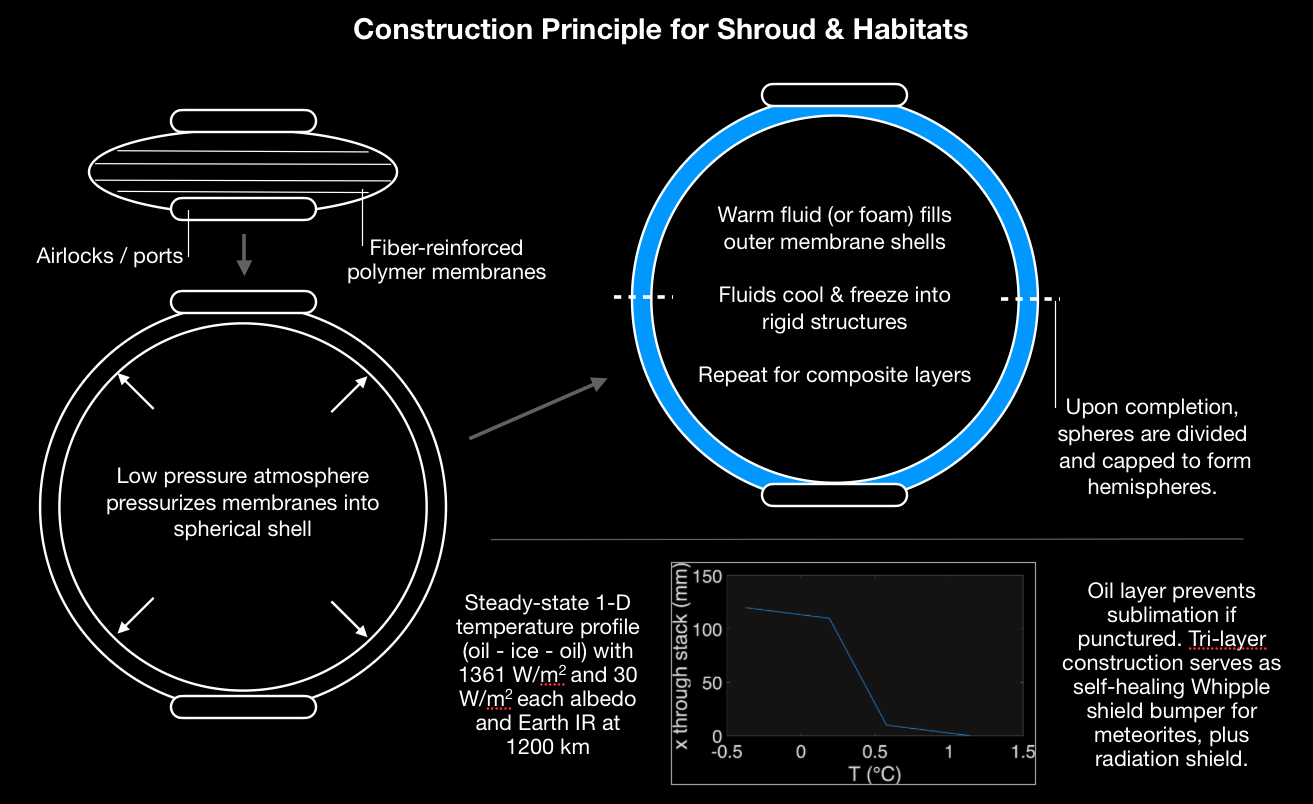
Surrounding the habitat is the Shroud, a self-healing oil-ice-oil trilayer Whipple shield which serves as radiation and meteorite protection.
Combined with aft propulsion systems, these features allow Primordia to be repurposed for a Mars transit vehicle.